
How Arrest Warrants Work in Colleton County
In Colleton County, an arrest warrant is a court order telling officers to take a person into custody. South Carolina law demands probable cause. The county Magistrate page names magistrates as the issuers of arrest and search warrants. A law-enforcement officer acting officially seeks the warrant, and a judge reviews the sworn facts before signing it when the legal standard is met. Municipal courts work differently. A city judge can issue an arrest warrant within the town's own jurisdiction. When a person outside law enforcement seeks process, state law provides a courtesy-summons route instead. The court and charge decide who keeps the file.
Colleton Officer-Sought Warrant Review
Under S.C. Code §22-5-110, a Colleton County judge may issue an arrest warrant on the request of an officer acting in an official law-enforcement capacity. The judge reviews the sworn facts. For summary matters, the Magistrate page names the Magistrates as warrant issuers. A municipal judge handles a city case. General Sessions files sit with the Clerk of Court. The rule governs how process is sought. It does not create a public lookup. A charge paper, a summons, and a warrant are three different documents. A file may not appear in the Public Index. Ask the issuing court if the record is sealed or held in another system. South Carolina Code Title 22, Chapter 5 sets out the magistrate warrant rules and municipal-warrant endorsement.
Arrest Warrants: What They Contain
A public court file can list the court, case, charge, issue date, judge, bond order, and serving agency. Warrant numbers are another matter. The Colleton Public Index guide lists no such field. A pattern like 2025GS150... is a case number, so use it to ask the Clerk which document or event is public.
| Case identifier | Connects an event to the court file; it may not be a warrant ID. |
|---|---|
| Charge | Shows the alleged offense or statute when the record is public. |
| Issuing judge / court | Identifies the authority and the clerk who can confirm the order. |
| Bond entry | May list terms; confirm amount and conditions with court or Bond Court. |
| Issue / service dates | May appear as separate docket events or a return. |
| Public access | Affidavits or sensitive material may be sealed or withheld. |
Colleton County Service Follows the Court
The Colleton County Sheriff's Civil Process and Warrants section serves and tracks county process. City police cover enforcement inside their own towns. The split matters for callers. Edisto Beach even staffs with two Colleton County deputies serving a town of seasonal visitors. Cottageville's public court directory confirms its municipal court but posts no separate warrant service portal. Call the Sheriff's warrant line. Ask which agency holds the order. For the charge, bond, or recall record, contact the issuing clerk, because the two calls answer different parts of one case.
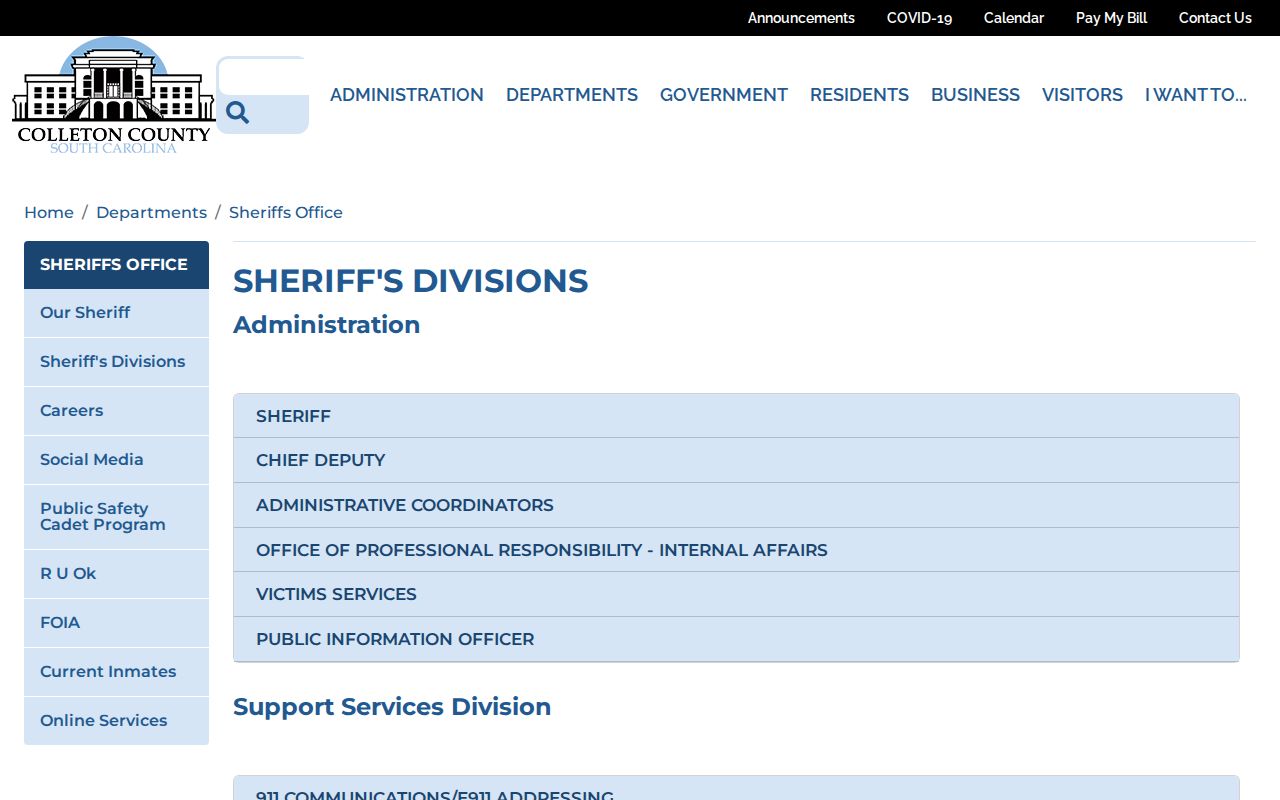
The listing splits Civil Process and Warrants from Records. Colleton County callers can use it to reach the right desk.
How Warrants Get Served in Colleton County
The Sheriff, municipal police, and other appropriate agencies may serve process within their authority in Colleton County. A municipal warrant travels, too. A magistrate's constable or the county Sheriff can be endorsed to execute it when the person is outside the town. The serving agency returns the result to the court. The judge still controls the case and release terms. Booking follows an arrest, then a bond or magistration process. Colleton County Bond Court sits in the Padgett Building, and the Detention Center handles custody. Call the Sheriff or the issuing court before a voluntary appearance. The public pages list no general warrant surrender window.
Colleton Municipal Warrants Can Cross Town Lines
South Carolina law lets a municipal warrant be endorsed for execution outside the city or town. A magistrate's constable or Sheriff may execute it. That endorsement does not move the case. The municipal judge still controls the charge, bond conditions, court date, and recall. An arrest outside the town raises a paperwork question. Ask the serving agency and the city clerk what the return says. A Colleton County service record may confirm custody. The city court still sets the next hearing, and S.C. Code §22-5-110 spells out the endorsement and execution rules.
Colleton CATCH Results Exclude Wanted Persons
SLED CATCH is a criminal-history report. Its own notice says wanted-person information is excluded. That means CATCH cannot confirm an active arrest warrant in Colleton County. A case search needs the same caution: a docket may show a warrant event, but the public index is no live service-status system. Ask the Sheriff's Warrants/Civil Process desk about service status. The issuing clerk holds the court record. Sealed affidavits, juvenile material, and active-investigation records may be withheld.
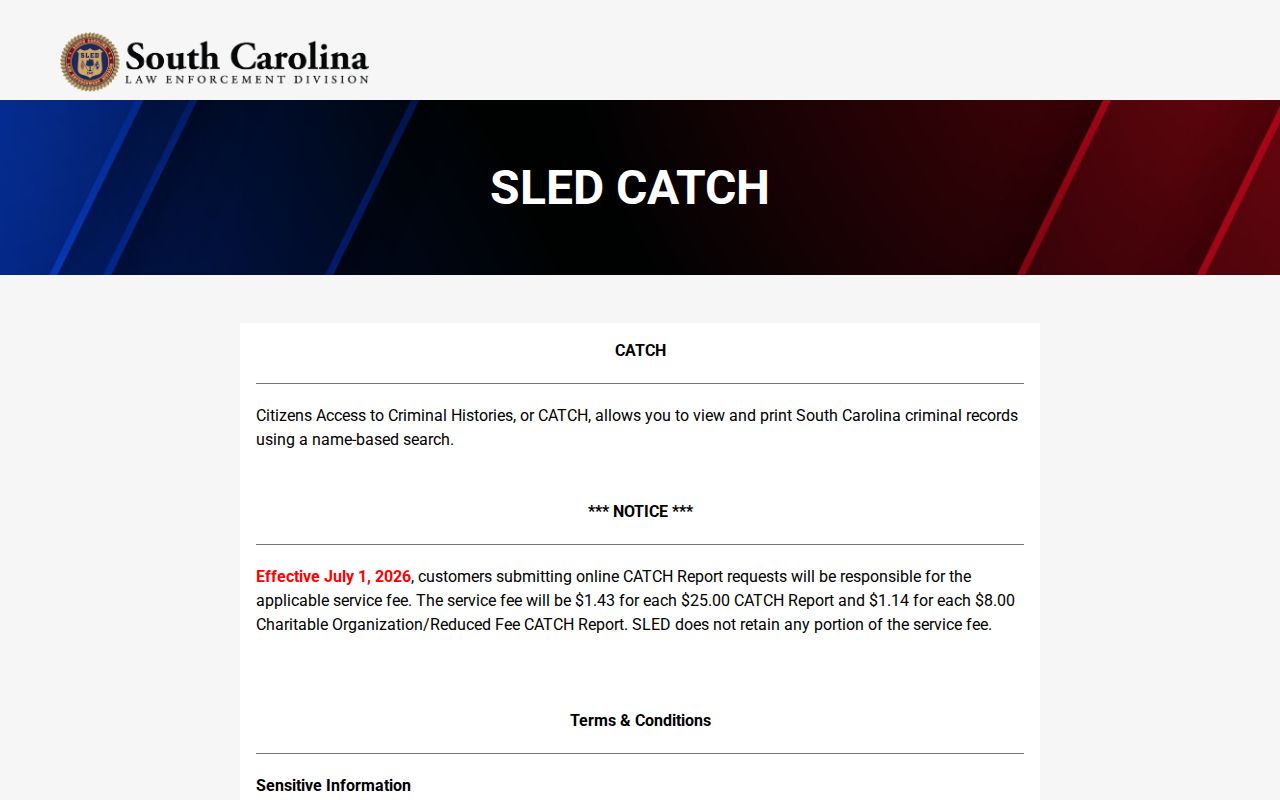
The CATCH notice leaves out wanted-person data. Colleton County readers need a separate court or Sheriff check.
Arrest Warrants, Summonses, and Bench Warrants
A summons tells someone to appear without ordering custody first. An arrest warrant authorizes custody on probable cause. A bench warrant comes after a court event, such as failure to appear or bond noncompliance. South Carolina's courtesy-summons rule also means the type of person seeking process can affect which document a Colleton County court issues.
| Feature | Arrest Warrant | Summons | Bench Warrant |
|---|---|---|---|
| What it orders | Arrest on the stated charge | Appear on a set date | Custody after a court obligation was missed |
| Basis | Probable cause | Process rules and the underlying complaint | Failure to appear, bond, or court compliance event |
| Issuer | Magistrate or authorized judge | Court process under state law | Judge of the court with the case |
| Next step | Confirm with court and counsel | Attend the date on the paper | Ask about recall, reset, appearance, or bond |
Colleton Federal Warrants Use Another Route
Federal warrants never touch the Colleton County dockets. They run through the U.S. District Court for South Carolina and federal law-enforcement offices instead. The Charleston courthouse is the nearest practical venue listed for Lowcountry matters. The U.S. Marshals Service carries out federal warrant work. One caution applies here. A public federal docket may hide a sealed warrant. For anything federal, use the federal clerk or the U.S. Marshals contacts on the official district pages, and save Colleton County numbers for a South Carolina state warrant.
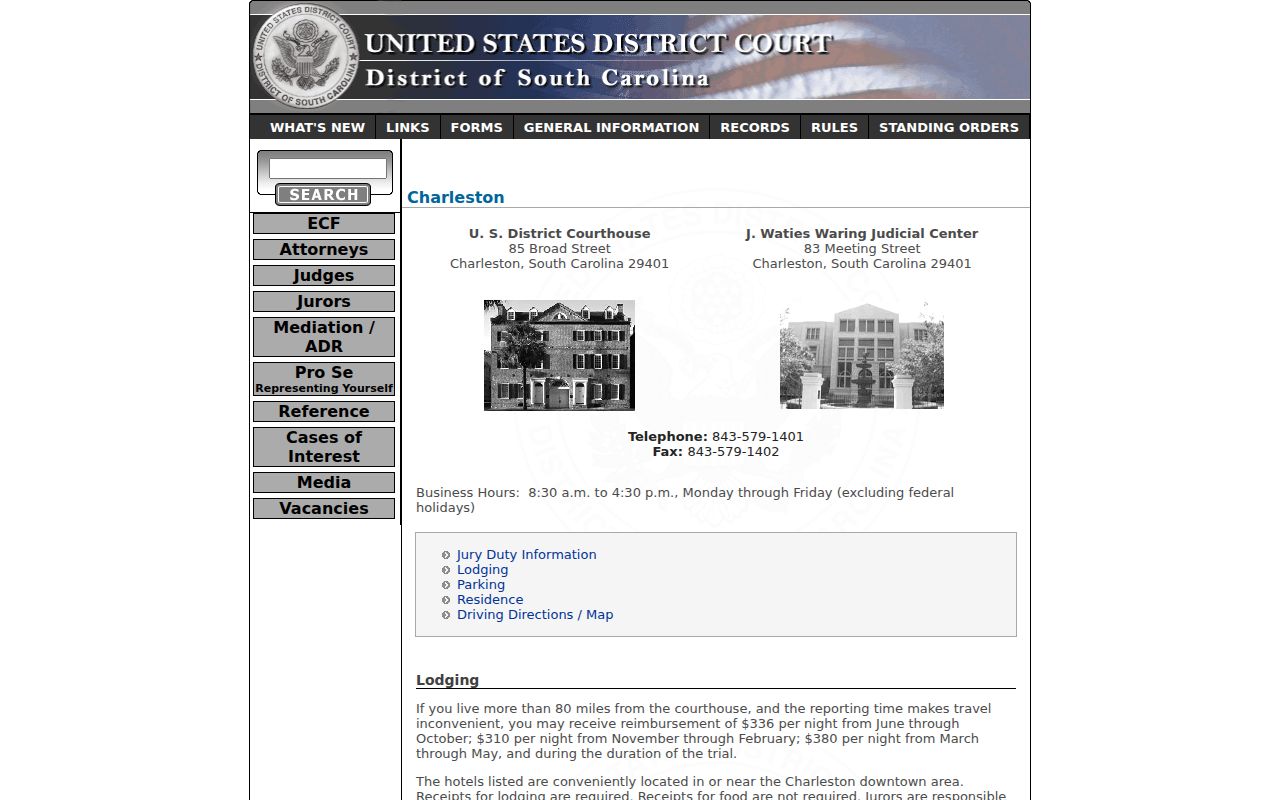
That Charleston courthouse listing marks the federal channel, which stays fully separate from the Colleton County Sheriff and the state trial-court process.
Handling an Arrest Warrant in Your Name
Start with two calls in Colleton County. Phone the Sheriff's warrant desk, then the court printed on the paperwork. Ask whether the warrant is still active, whether it has been served, and whether the judge wants a surrender, a bond hearing, or a motion. A General Sessions matter belongs with the Clerk, and a lawyer is worth considering at that level. City or Magistrate clerks handle municipal and summary charges. Colleton County's Sheriff posts no general public surrender procedure, so the court's instructions control. A judge can recall the warrant, set a new appearance, or order custody with bond. Paying a fine, or watching a case vanish from a search, does not clear anything by itself. Get written confirmation from the issuing court after every step.
Important: Ask an attorney to confirm the issuing court, surrender location, and bond process before arranging an appearance on an active warrant.